
High Impact. Low Investment.
Rapid Software Prototyping Services
Quickly and effectively prove application development use cases so you reduce risk and go to market faster with our software product design prototyping services.
Why Rapid Prototyping in Software Testing Matters
Digital product rapid prototyping accelerates learning and minimizes risk. By visualizing ideas early, you can identify pain points, refine requirements, and confirm that the solution meets both user and business needs.
- Lower Risk of Failure: Test ideas early and resolve potential issues before they become costly.
- Increased Confidence in Decisions: Validate readiness and functionality through real user interaction.
- Tangible Stakeholder Alignment: Use functional prototypes to communicate vision, demonstrate progress, and build leadership support.
- Smarter Investment: Identify ideas unlikely to deliver value and pivot quickly, saving time and capital.
- Actionable User Feedback: Gather insights from users and project owners during early stages to guide product direction.
- Faster Iteration: Work through multiple design and functionality versions quickly to refine the best path forward.
Validate your vision before you build.
Partner with InfoWorks for rapid prototyping software development services that turn ideas into actionable insight and reduce risk across your project. Say goodbye to long development cycles and hello to innovation on the fast track.
When to Use Rapid Prototyping
Rapid prototyping in software engineering helps answer critical questions at any stage of the software product development process. Common use cases include:
- Early-stage product ideas: Test viability before funding full development, helping to define your minimum viable product (MVP).
- Software development proof of concept: Confirm that a feature, integration, or technology stack will work as expected.
- Complex workflows: Validate usability for systems with multiple user roles or data layers.
- Modernization projects: Visualize interface or process updates before implementing them in production systems.
- Stakeholder alignment: Present a working model to secure leadership or client buy-in.
Types of Rapid Prototype Models
InfoWorks offers two software development prototype models to match your goals, timeline, and desired level of validation.
Mockup Rapid Prototype
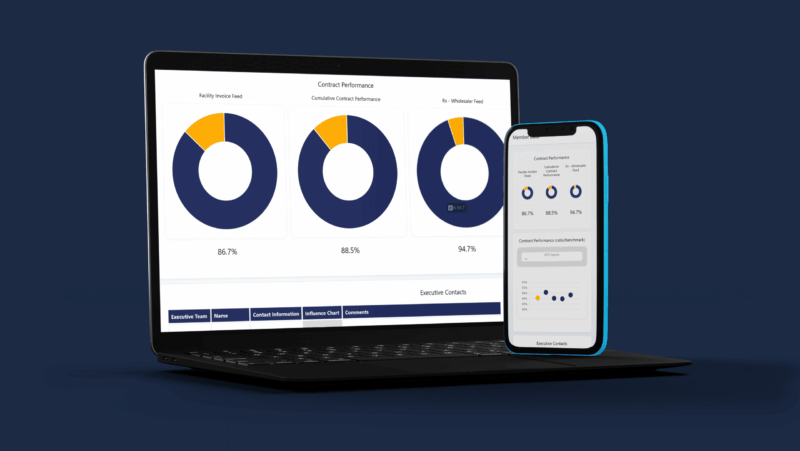
A mockup rapid prototype provides a visual representation of your proposed application. Think of it like a movie set neighborhood where nothing is built behind the scenes, but the front gives the impression of a fully functioning city. Similarly, the “front” of your mockup looks and behaves like a finished product, while the back end remains simple. This model helps clarify vision, test usability, and align teams around layout and workflow before writing code.
Generative AI Integration for Healthcare Professionals
Proof-of-Concept Rapid Prototype
A proof of concept in software development goes a step further by building out key functionality or integrations. This model demonstrates what’s technically possible and helps determine practicality, effort, and potential risks. This approach is ideal for complex applications or innovative use cases that need more high-fidelity prototyping before moving to full-scale development.
Our Rapid Digital Prototyping Process
We use an iterative, collaborative process for rapid prototyping in software testing. Every engagement starts with understanding your objectives and ends with actionable insights for the next phase of development.

Software Proof of Concept Development
Evaluate critical functionality and user interfaces. Our expertise in UI/UX design ensures that these POCs are not only functional but also intuitive and user-friendly.
Functional Application Prototyping Services
Explore live interaction testing with target audiences. The insights gained during prototyping feed directly into our software strategy and architecture planning.

User Research and Feedback Sessions
Validate assumptions and gather end-user input. Our comprehensive user research and testing services can also guide product direction. We make iterative refinements based on user feedback and other findings.

Seamless Path to Full-Scale Development
Transition effortlessly from prototype to production with our custom software development services.
Healthcare Executive Dashboard
A healthcare organization needed an application for executives to view client data through an interactive dashboard. With multiple data sources and inconsistent formats, visualizing performance was difficult. InfoWorks developed a rapid prototype that demonstrated how information could be consolidated and displayed in real time. Creating prototypes clarified requirements, confirmed technical feasibility, and built collaborator support, all before full-scale development began.
Read Case StudyTurn ideas into impact.
Work with InfoWorks to validate, refine, and prove your software concept before you build it with our application rapid prototyping services.